Orígen
Este movimiento de desarrollo organizacional, DO, surgió a partir de 1962 como un complejo conjunto de ideas respecto del hombre, de la organización, y del ambiente, orientado a propiciar el crecimiento y desarrollo según sus potencialidades, el DO es un resultado práctico y operacional de la teoría del comportamiento orientada hacia el enfoque sistemático.
Un intenso movimiento que congrega a varios autores que buscan aplicar las ciencias del comportamiento a la administración.
Los orígenes del DO pueden atribuirse a varios factores:
- La dificultad en operacionalizar conceptos de las diversas teorías sobre la organización, que traían un enfoque diferente, el desarrollo organizacional es el resultado de los esfuerzos de la teoría conductista para promover el cambio y la flexibilidad organizacional y en conflicto con las demás, a saber:
- La teoría clásica propuesta por Taylor y por Fayol hizo énfasis, cada una por separado, en la organización formal y en la racionalización de los métodos de trabajo. La organización científica desarrolló un enfoque rígido y mecanicista, que consideraba al hombre desde un punto de vista atomista y simplista (hombre económico), como un apéndice de la máquina. Esa teoría se evidencio como incompleta y parcializada;
- La teoría de relaciones humanas, propuesta por Mayo, fue una reacción de oposición al tradicionalismo de la teoría clásica. Hizo énfasis en el hombre (hombre social) y en el clima psicológico del trabajo. Las expectativas de los empleados, sus necesidades psicológicas, la organización informal y la red convencional de comunicaciones pasan a ser los componentes principales de los estudios de administración. El liderazgo pasa a sustituir la autoridad jerárquica formal.
- Esa teoría resulto incompleta y parcial, pues solo reforzó aquellos aspectos organizacionales omitidos ó rechazados por la teoría clásica;
- La teoría de la burocracia pretendió sentar las bases de un modelo ideal y racional de organización que pudiese ser copiado y aplicado a las empresas, cualquiera que fuera su ramo de actividad, Weber describió las características más importantes de la organización burocrática o racional, basándose en la estructura militar del ejercito prusiano, sin embargo los seguidores de Weber comprobaron una serie de distorsiones, la organización burocrática, ideal y teórica, carecía de la flexibilidad para adaptarse necesariamente a las innovaciones de una sociedad moderna.
- La teoría estructuralista representó una visión mas crítica de la organización, esta concibe la sociedad moderna como una sociedad de organizaciones. Una organización debe ser interpretada como la síntesis de la organización formal y de la informal. Dentro de una organización encontramos los objetivos organizacionales (mayores utilidades, mayor eficacia, crecimiento, etc.) en conflicto con los objetivos individuales de los participantes (mayores salarios, mejor horario de trabajo, prestigio, etc.). La teoría estructuralista apunta más hacia los problemas y aspectos críticos de las organizaciones que a las soluciones, propiamente dichas. No presenta una teoría de la organización: sólo critica las teorías hasta entonces existentes y ofrece un método de análisis y comparación de las organizaciones;
- La teoría del comportamiento surgió a partir de la teoría de las relaciones humanas, resultando un enfoque predominantemente sociológico y motivacional. La organización se visualiza como un organismo social que tiene vida y cultura propia, en el cual se desarrollan estilos de administración y sistemas de organización para dirigir a las personas. De allí surge el comportamiento organizacional, fruto de los intercambios y estándares de las relaciones de las personas. La teoría del comportamiento fue más una teoría que aportó nuevos conceptos y contribuciones que una teoría definitiva de la administración. De la teoría del comportamiento resultó el movimiento del desarrollo organizacional orientado a lograr el cambio y la flexibilidad organizacional. Se comprobó que no basta sólo con desarrollar un entrenamiento sin producir un cambio específico, sino que es necesario también preestablecer un patrón de desempeño y un programa coherente de cambios en toda la organización.
- La profundización de los estudios sobre la motivación humana y su interferencia en la dinámica de las organizaciones. Estas teorías demostraron la necesidad de buscar un nuevo enfoque de la administración, capaz de interpretar una nueva concepción del hombre moderno y de la organización actual, con base en la dinámica motivacional. Se comprobó que los objetivos de los individuos no siempre se conjugan con los objetivos organizacionales, lo que provoca un comportamiento ineficiente que impide alcanzar los objetivos.
- La creación del Nacional Training Laboratory de Bethel en 1947 y la realización de las primeras investigaciones de laboratorio sobre el comportamiento del grupo, destinada a reeducar el comportamiento humano y mejorar las relaciones sociales, a través de los T-Groups.
- La publicación de un libro producto de las investigaciones con los T-groups, el coordinador, Leland Bradford es considerado por algunos autores el precursor del movimiento llamado desarrollo organizacional.
- La pluralidad de los cambios en el mundo originaron el desarrollo organizacional, a saber:
- Una transformación rápida e inesperada del ambiente organizacional;
- Un aumento del tamaño de las organizaciones, que hizo que el volumen de las actividades tradicionales de la organización no fuera suficiente para sostener el crecimiento.
- La tecnología moderna, requiriendo personas altamente especializadas y de competencias muy diferentes;
- Cambios en la conducta administrativa debido a un:
- Nuevo concepto del hombre basado en el conocimiento de sus mutables y complejas necesidades.
- Nuevo concepto de poder basado en la colaboración y en la razón.
- Nuevo concepto de valores organizacionales, basado en ideas humano-democráticas.
- La gran invención del final del siglo XX. Esta modifico la vida de la sociedad, de las organizaciones, del hombre y de su visión del mundo.
- La fusión del estudio de la estructura y el estudio del comportamiento humano en las organizaciones, La teoría de sistemas aglutinó los aspectos estructurales y los del comportamiento, posibilitando el surgimiento del desarrollo organizacional. Existe una diferencia entre proceso (procedimientos) y estructura, los aspectos estructurales son elementos estáticos de la organización y se refieren a la distribución de sus diferentes componentes (división del trabajo, autoridad y responsabilidad).El proceso (procedimiento) es dinámico y se refiere a las normas que determinan una organización, los cargos y funciones asumidos por las personas, la manera como se resuelven los problemas y se toman las decisiones.
- El DO se limitó a los conflictos interpersonales de pequeños grupos, pasó luego a la administración pública y posteriormente a todos los tipos de organizaciones humanas (industrias, empresas de servicio, organizaciones militares, etc.). El DO pretende ser una especialidad de la psicología, a pesar de que su aplicación no se restrinja a un enfoque meramente psicológico. Es una continuación de la teoría de las relaciones humanas, al proponer una teoría social del ámbito organizacional. El DO solo se afirmó cuando incorporó el enfoque sistemático en el estudio de las organizaciones.
- Los diversos modelos de DO consideran básicamente cuatro variables. Estas cuatro variables básicas son abordadas con una especial atención en su interrelación e interdependencia, para que un cambio permita lograr tanto los objetivos organizacionales como los individuales:
- El ambiente, centrado en aspectos como la turbulencia ambiental, la explosión del conocimiento, de la tecnología y de las comunicaciones, y en el impacto de esos cambios sobre las instituciones y los valores sociales;
- La organización, tomando en cuenta las características de dinamismo y flexibilidad organizacional para sobrevivir en un ambiente dinámico y cambiante, donde surgen nuevas tecnologías, nuevos valores sociales, nuevas expectativas, etc.;
- El grupo social, considerando aspectos de liderazgo, comunicación, relaciones interpersonales, conflictos, etc.;
- El individuo, resaltando las motivaciones, actitudes, necesidades, etc.;
LOS CAMBIOS Y LA ORGANIZACIÓN
El concepto de desarrollo organizacional está íntimamente ligado a los conceptos de cambio y de capacidad adaptativa de la organización sujeta del cambio del medio ambiente.
El DO parte de conceptos dinámicos como:
a) CONCEPTO DE ORGANIZACIÓN
Este concepto es para los autores especialistas del desarrollo organizacional típicamente conductista: «una organización es la coordinación de diferentes actividades de participantes individuales con la finalidad de efectuar transacciones planeadas con el ambiente». Las contribuciones de cada participante varían en función del sistema de recompensas y contribuciones para la organización.
Este concepto utiliza la noción tradicional del trabajo al referirse a las diferentes actividades y a la coordinación en la organización y se refiere a personas como contribuyentes de las organizaciones. la contribución de cada participante a la organización depende de sus diferencias individuales y del sistema de recompensas y contribuciones de la organización.
Toda organización actúa en determinado ambiente y su existencia y supervivencia dependen de como se relacione con ese medio. Por tanto debe ser estructurada y dinamizada en función de las condiciones y circunstancias en que opera.
Se deben destacar las diferencias fundamentales existentes entre los sistemas mecánicos (típicos del concepto tradicional) y los sistemas orgánicos (enfoque del DO.). Estos últimos logran que las organizaciones sean colectivamente conscientes de sus destinos y de la orientación para alcanzarlos. Desarrollan una nueva concientización social de los participantes, los cuales, al lado de su vivencia particular, de su pasado personal y de su autoconcientización, definen su rol en relación con su organización.
b) CONCEPTO DE CULTURA ORGANIZACIONAL
Es el conjunto de hábitos, creencias, valores y tradiciones, interacciones y relaciones sociales típicos de cada organización. Representa la forma en que estamos acostumbrados a realizar las cosas.
De la misma manera, toda organización tiene la suya. Se denomina » cultura organizacional » al modo de vida propio que cada organización desarrolla en sus miembros. La cultura de una organización no es estática, sino que experimenta alteraciones con el transcurso del tiempo, dependiendo de las condiciones internas y externas. Algunas organizaciones logran renovar constantemente su cultura manteniendo su integridad y su personalidad, en tanto que otras permanecen con su cultura atada a patrones obsoletos y pasados de moda.
El DO Considera que para cambiar una organización, la única manera viable es cambiar su cultura, es decir, los sistemas en los cuales las personas viven y trabajan.
c) CLIMA ORGANIZACIONAL.
También enfatizan en el clima organizacional, el cual constituye el medio interno de una organización y su atmósfera psicológica particular.
El clima organizacional está íntimamente ligado a la moral y a la satisfacción de las necesidades humanas de sus miembros. El clima puede ser saludable o malsano, cálido o frío, negativo o positivo, satisfactorio o insatisfactorio, dependiendo de cómo se sienten los participantes con respecto a la organización.
Algunos individuos son más o menos sensibles que otros en relación con aspectos de ese clima, además una característica que parece ser positiva para un miembro de una organización puede ser percibida como negativa o insatisfactoria para otros.
El concepto de clima organizacional comprende diversos grados, como el tipo de organización, la tecnología utilizada, las políticas de la compañía, las metas operacionales, los reglamentos internos (todos ellos constituyen los factores estructurales), además de las actitudes y formas de comportamiento social, impulsadas o castigadas (constituyen los factores sociales).
d) CAMBIO DE CULTURA Y DEL CLIMA ORGANIZACIONAL
Cada organización es un sistema humano complejo, con características propias, con su propia cultura y su propio clima organizacional. Todo ese conjunto de variables debe ser continuamente observado, analizado y perfeccionado para lograr productividad y motivación.
Para que la organización pueda cambiar la cultura y el clima organizacional, necesita tener capacidad innovadora, representada en las características siguientes:
- Adaptabilidad, es decir la capacidad para resolver problemas y reaccionar de manera flexible a las cambiantes e inconstantes exigencias del ambiente. Para poder adaptarse, la organización debe:
- Ser flexible, para poder integrar nuevas actividades
- Ser receptiva y transparente a nuevas ideas, vengan de adentro o de fuera de la organización;
- Sentido de identidad, es decir, que los participantes conozcan y comprendan el pasado y el presente de la organización, así como comprendan y compartan los objetivos de la misma;
- Perspectiva exacta del medio ambiente, es decir, una percepción realista unida a una capacidad de investigar, diagnosticar y comprender el ambiente;
- Integración entre los participantes, de tal manera que la organización pueda comportarse como un orgánico. Por tanto, no basta cambiar la estructura. Es necesario cambiar la cultura de la organización.
e) CONCEPTO DE CAMBIO
El mundo actual se caracteriza por un cambio constante en el ambiente. El ambiente general que envuelve las organizaciones es demasiado dinámico, y les exige una elevada capacidad de adaptación como base de supervivencia. La década de los sesenta fue la » década de la explosión » y caracterizó condiciones para el surgimiento del DO.
- El ambiente general altamente dinámico, que implica la explosión del conocimiento, de la tecnología, de las comunicaciones y de la economía
- El ambiente empresarial, frente a la internacionalización de los mercados, a la vida más corta de los productos, a la creciente importancia del marketing. Esto origina una serie de exigencias completamente nuevas al administrador.
El concepto de cambio incluye tres fases a tomar en cuenta:
- Descongelamiento del estándar actual de comportamiento. Surge cuando la necesidad de cambio se hace tan obvia que la persona, grupo u organización puede rápidamente entenderla y aceptarla, para que el cambio pueda ocurrir. Si no existe descongelamiento la tendencia será retorno puro y sencillo al estándar habitual.
- Cambio. Surge cuando se descubren y adoptan nuevas actitudes, valores y conductas. El agente de cambio conduce a personas, grupos o a toda la organización para promover nuevos valores, actitudes y conductas por medio de procesos de identificación e internalizacion.
- Recongelamiento. Significa la incorporación de un nuevo estándar de conducta por medio de mecanismos de soporte y de refuerzo, de modo que ese estándar se transforme en la nueva norma.
f) PROCESO DE CAMBIO SEGÚN KURT LEWIN
El proceso de cambio ocurre en un campo dinámico de fuerzas que actúan en varios sentidos. De un lado, existen fuerzas positivas que actúan como apoyo y soporte del cambio y, de otro lado, fuerzas negativas que actúan como oposición y resistencia al cambio.
El sistema opera dentro de un estado de de relativo equilibrio que se denomina casi-estacionario. Este se altera cuando surge alguna presión de fuerzas ya sean positivas o negativas. El cambio es el resultado de la competencia entre las fuerzas impulsoras y las restrictivas.
La organización debe de estar atenta a las nuevas necesidades y oportunidades que le presenta su medio.
El cambio debe ser planeado y orientado hacia un objetivo previamente establecido.
g) CONCEPTO DE DESARROLLO
La tendencia natural de toda organización es crecer y desarrollarse. El desarrollo es un proceso lento y gradual que conduce al exacto conocimiento de sí misma y a la plena realización de sus potencialidades.
El desarrollo organizacional es necesario siempre que la organización compita y luche por su supervivencia en condiciones cambiantes. Cada época desarrolla la forma organizacional más adecuada y característica para su naturaleza. Los cambios que están ocurriendo en el mundo moderno hacen necesario revitalizar y reconstruir nuestras organizaciones.
Mientras el cambio genérico implica alteraciones en el ambiente, el cambio organizacional es un conjunto de alteraciones estructurales y de comportamiento en una organización. Esos dos tipos fundamentales de alteraciones (estructurales y de comportamiento son interdependientes y se compenetran íntimamente.
El desarrollo de una organización le permite:
- Un conocimiento profundo y real de si misma y de sus posibilidades;
- Un conocimiento profundo del medio ambiente en que opera;
- Una planeación adecuada y una ejecución exitosa.
El DO Destaca que para que una organización pueda alcanzar un cierto nivel de desarrollo deben utilizar diferentes estrategias de cambio.
Existen tres clases de estrategias de cambio:
- Cambio evolutivo: «cuando el cambio es mínimo y está dentro de las expectativas y las conveniencias”. El cambio evolutivo es lento, moderaDO Hay una tendencia a repetir y reforzar las soluciones sólidas y eficientes, y abandonar las soluciones débiles y deficientes;
- Cambio revolucionario: generalmente este cambio es rápido, intenso, brutal, sobrepasa y rechaza las antiguas expectativas e introduce algunas nuevas.
- Desarrollo sistemático: en este, los responsables del cambio diseñan modelos explícitos de lo que la organización debería ser en comparación con lo que es, mientras aquellos cuyas acciones serán afectadas por el desarrollo sistemático, estudian, evalúan y critican el modelo de cambio para recomendar modificaciones, basadas en su propio discernimiento y comprensión.
h) FASES DE LA ORGANIZACIÓN
Las organizaciones asumen diversas formas organizacionales en diferentes ambientes y épocas, Aún más, las organizaciones, durante su existencia, recorren cinco fases bastante diferenciadas.
- Fase pionera: es la fase inicial de la organización, llevada a cabo por sus fundadores. Como todavía es pequeña, sus procesos son fácilmente supervisibles y controlables. Hay pocas tareas rutinarias y un gran volumen de improvisaciones, la capacidad de la empresa para realizar innovaciones es muy elevada.
- Fase de expansión, es la fase en que la organización crece, intensifica sus operaciones y aumenta el número de sus participantes. La preocupación básica es el aprovechamiento de la producción de la organización;
- Fase de reglamentación: con el crecimiento de las actividades se ve obligada a establecer normas de coordinación entre los diversos departamentos o sectores, y a definir rutinas y procesos de trabajo;
- Fase de burocratización: se desarrolla una cadena de mando bien definida, una detallada visión del trabajo basada en la especialización y unas relaciones impersonales entre los participantes. Esa organización piramidal y monocrática presenta muy poca flexibilidad para los cambios y para la innovación;
- Fase de reflexibilización: o sea, de readaptación a la flexibilidad, de reencuentro con la capacidad de innovación perdida.
i) CRÍTICAS A LAS ESTRUCTURAS CONVENCIONALES
Los especialistas en DO Destacan que las estructuras no tienen condiciones para estimular la actividad innovadora ni para adaptarse a circunstancias cambiantes. Las principales críticas que hacen a las estructuras convencionales de la organización son:
- El poder de la administración frustra al empleaDO El poder es inherente e indispensable a toda la organización. Es a través del poder como la organización retiene al empleado, y no lo contrario. El poder diferencia los intereses de la organización de los intereses de los empleados. Esto conduce a que muchas veces, éstos no se identifiquen con ella, desmejorando el desempeño de sus funciones, mediante actitudes negativas.
- La división del trabajo y la fragmentación de funciones impiden el compromiso emocional del empleaDO Cuando la organización está dividida en departamentos, éstos en divisiones, éstas en secciones, y así sucesivamente, se presenta una fragmentación en la que el esfuerzo humano se limita a rutinas predeterminadas y rígidas. El compromiso personal es una emoción. Si ésta se ignora, no existe el compromiso personal y la a ser ejecutada de modo mecánico, automático y sin motivación. La motivación es un estado del espíritu relacionado directamente con la emoción. Si ésta no se encuentra presente en una organización, no habrá compromiso personal de los individuos;
- La autoridad única o unidad de mando restringe la comunicación del empleado y afecta negativamente el compromiso de éste con la organización. La autoridad lineal limita y establece sólo un canal de comunicación de arriba hacia abajo. Cada empleado tiene un solo supervisor, que es la terminal de su único contacto con la organización.
- Las funciones permanentes, una vez designadas, se hacen fijas e invariables. El movimiento del personal dentro de las organizaciones depende de las posibilidades creadas por los retiros, jubilaciones, fallecimientos y algunos nuevos cargos creados eventualmente, muchas veces, la organización tiene que perder personal para crear posibilidades de ascenso para sus empleados. Las tareas se ejecutan dentro de la misma rutina durante largos periodos de tiempo, lo cual conduce a la reducción de la participación espontánea y a la monotonía.
QUÉ ES EL DESARROLLO ORGANIZACIONAL
En principio, desarrollo organizacional es todo cambio planeaDO Tiene sus raíces en la idea de una organización y un sistema social. Es un proceso planeado de modificaciones culturales y estructurales, aplicado a una organización que visualiza una serie de tecnologías sociales, de tal manera que la organización quede habilitada para diagnosticar, planear e implementar esas modificaciones con asistencia externa o sin ella.
El DO es una respuesta de la organización a los cambios. Destinado a cambiar las actitudes, los valores, los comportamientos y la estructura de la organización, de tal modo que ésta pueda adaptarse mejor a las nuevas coyunturas, mercados, tecnologías, problemas y desafíos que surgen constantemente en progresión creciente. El D.O. también abarca el sistema total de una organización y la modificación planeada, para aumentar la eficiencia y la eficacia de la organización, Toda organización interactúa con el medio ambiente: influye en el ambiente y recibe sus influencias.
El DO Percibe con claridad lo que está ocurriendo en los ambientes interno y externo de la organización, analiza y decide que debe cambiarse y cómo intervenir para introducir el cambio, haciendo la organización más eficaz, perfectamente adaptable a los cambios y conciliando las necesidades humanas fundamentales con los objetivos y metas de la organización. El D.O. se basa en las ciencias del comportamiento, se parte del principio de que el cambio planeado es una técnica especializada, cuyo propósito es crear acción y cambio conscientes y racionales. Esta definición incluye los siguientes significados:
- Proceso de solución de problemas. Se refieren a los métodos por medio de los cuales la empresa se enfrenta con las amenazas y oportunidades en su ambiente.
- Proceso de renovación son las formas por las cuales los gerentes adaptan sus procesos de solución de problemas a las demandas del ambiente. Uno de los objetivos del DO es mejorar los procesos organizacionales de autor renovación, mediante la transformación de los gerentes para que puedan adaptar y cambiar su estilo.
- Administración participativa. Otro objetivo del DO es compartir la administración con los empleados. La administración participativa significa que los gerentes dejan a un lado la estructura jerárquica y dan a los empleados un papel importante en la toma de decisiones.
- Desarrollo y fortalecimiento. Se refiere a darles libertad a los equipos de actuar, de participar en las decisiones, plena autonomía.
- Investigación-acción. El DO utiliza la investigación para el diagnostico y la acción del cambio.
Requiere de los siguientes pasos.
- Diagnostico preliminar del problema
- Obtención de datos para apoyo o rechazo del diagnostico.
- Retroalimentación de datos a los participantes.
- Exploración de datos por los participantes.
- Ejecución de la acción apropiada
a) SUPUESTOS BÁSICOS DEL DO
Los supuestos básicos que se consideran los más importantes:
- Mutación rápida y constante del ambiente. El mundo moderno se caracteriza por cambios rápidos y en progresión explosiva. Hay cambios científicos, tecnológicos, económicos, etc., que actúan e influyen en el desarrollo y el éxito de las organizaciones en general (empresas industriales, empresas de servicios, administración pública, hospitales, universidades, etc.).
- Necesidad de continua adaptación. El individuo, el grupo, la organización y la comunidad son sistemas dinámicos y vivos de adaptación, ajuste y reorganización, como condición básica de supervivencia en un ambiente en continuo cambio.
- Interacción entre la organización y el individuo. El DO parte de una filosofía sobre que el ser humano esta dotado de aptitudes para la productividad que pueden permanecer inactivas si el contexto en que trabaja es hostil. Es posible el integrar las metas de los individuos con los objetivos de la organización, en un plan en el que el significado del trabajo sea realmente estimulante y gratificante y aporte posibilidades de desarrollo personal.
- Cambio organizacional planeaDO El liderazgo personal por intuición (espontáneo e improvisado) debe ser sustituido por un liderazgo organizacional con autoridad del conocimiento sobre la autoridad jerárquica de la posición. La presencia de conflictos y riesgos es un desafío y no una amenaza o peligro. El cambio planeado es un proceso continuo, que necesita tiempo y que no se resuelve en unos pocos instantes.
- Necesidad de participación y de compromiso. El cambio planeado es una conquista colectiva y no el resultado del trabajo de pocas personas.
- La mejora de la eficacia organizacional y del bienestar de la organización dependen de la comprensión y de la aplicación de los conocimientos sobre la naturaleza humana.
- La variedad de modelos y estrategias de DO Existen varios modelos y estrategias para situaciones en función del diagnostico hecho.
- El DO es una respuesta a los cambios. Es un esfuerzo educacional complejo, destinado a cambiar actitudes, valores, etc. y la estructura de la organización, de tal forma que esa pueda adaptarse a las demandas ambientales, caracterizadas por nuevas tecnologías, nuevos mercados, problemas y desafíos. Las organizaciones son sistemas abiertos, » Las organizaciones son sistemas abiertos, sensibles, con capacidad de respuesta a los cambios ambientales. Podemos llamarlos sistemas porque tienen límites y la capacidad para autoperpetuarse y desarrollarse. Son abiertos porque intercambian materia, energía e información con el ambiente y las transforman dentro de sus límites”.
b) LAS CARACTERÍSTICAS DEL DO
La definición de DO supone varias características, como:
- Enfocarse a la organización como un todo. El DO involucra a la organización como un todo para que el cambio pueda ocurrir efectivamente.
- Orientación sistémica. El DO se enfoca para las interacciones entre las partes de la organización que se influenciaron recíprocamente, para las relaciones de trabajo entre las personas, así como para la estructura y los procesos organizacionales.
- Agente de cambio. El DO utiliza agentes de cambio, que son las personas que desempeñan un papel de estimular, orientar y coordinar el cambio dentro de un grupo.
- Solución de problemas. El DO enfatiza la solución de problemas y no solamente los discute teóricamente. Para eso utiliza la investigación-acción o sea la mejoría organizacional por medio de la investigación y del diagnostico de los problemas y de la acción necesarios para resolverlo.
- Aprendizaje experimental. Los participantes aprenden por la experiencia en el ambiente de capacitación los tipos de problemas que enfrentan en el trabajo.
- Proceso de grupo y desarrollo de equipos. El DO descansa sobre procesos grupales como discusiones en grupo, confrontaciones, conflictos intergrupales y procedimientos para cooperación.
- Retroalimentación. El DO proporciona información de retorno y retroalimentación a las personas para que ellos tengan datos concretos que fundamenten sus decisiones. La retroalimentación provee información de retorno sobre su conducta y motiva las personas a comprender las situaciones en que están involucradas y tomar acción auto correctiva.
- Orientación situacional. El DO sigue un procedimiento rígido e inmutable. Todo lo contrario es situacional y orientado para las contingencias. Es flexible pragmático, adapta las acciones para adecuarlas a las necesidades especificas y particulares que se diagnosticaron.
- Desarrollo de equipos. El DO se hace por medio de equipos. Su proposición es el cambio planeado parte del principio de que no existe un modelo ideal aplicable a cualquier circunstancia. Las organizaciones deben adaptarse a sus circunstancias de forma planeada.
10. Enfoque interactivo. Las comunicaciones e interacciones constituyen los aspectos fundamentales del DO para obtener multiplicación de esfuerzos rumbo al cambio. La sinergia es fundamental en las interacciones.
c) OBJETIVOS DEL DO
Los objetivos comunes del DO son:
- Creación de un sentido de identificación de las personas en relación con la organización.
- Desarrollo del espíritu de equipo por medio de la integración y de la interacción de las personas.
- perfeccionamiento de la percepción común sobre el ambiente externo con la finalidad de facilitar la adaptación de toda la organización.
d) APLICACIONES DEL DO
Existen ciertas condiciones organizacionales que requieren aplicación y empleo del D.O., la condición esencial es que alguien, en una posición estratégica de la organización, sienta la necesidad de modificación, Los programas de D.O. pueden aplicarse a los siguientes tipos de condiciones organizacionales o necesidades sentidas de cambio:
- Necesidad de cambiar normas culturales, o sea, la cultura organizacional.
- Necesidad de cambiar estructuras y posiciones; es decir, los aspectos formales de la organización.
- Necesidad de mejorar la colaboración intergrupal
EL PROCESO DEL DO
La tecnología del desarrollo organizacional, surgió de las ciencias del comportamiento. En este sentido el D.O. constituye un proceso que consta de tres etapas: recolección de datos, diagnóstico
- Recolección de datos: la recopilación y el análisis de datos es una de las actividades más difíciles técnicas y métodos para describir el sistema organizacional, las relaciones entre sus elementos y subsistemas. y las maneras de identificar los problemas y asuntos más importantes.
- Diagnóstico organizacional: se orienta principalmente al proceso de solución de problemas. Presta considerable atención al desarrollo y verificación de nuevos enfoques para la solución de problemas organizacionales y a la preparación del sistema para el cambio.
- Intervención: la acción de intervención puede realizarse a través del entrenamiento de la sensibilidad o de métodos de laboratorio. La intervención es una fase del proceso del D.O. que puede ser definida como una acción planeada que debe ejecutarse a continuación de la fase de diagnóstico. El hecho de obtener datos o de diagnosticar es una manera de intervenir en el sistema. La intervención no es la fase final del D.O., sino una etapa capaz de facilitar el proceso. El cual debe ser continuo.
TÉCNICAS DEL DO
1. TÉCNICAS DE INTERVENCIÓN PARA INDIVIDUOS.
La técnica principal de DO para las personas es la capacitación de la sensitividad. Es una modalidad de dinámica de grupo destinada a reeducar la conducta humana y mejorar las relaciones sociales. Se realiza por medio de grupos llamados T-groups (grupos de capacitación) que tienen alrededor de diez participantes un Psicólogo los orienta en un laboratorio con la finalidad de incrementar su sensibilidad en sus habilidades para relacionarse en forma interpersonal. En varias reuniones, los participantes diagnostican y experimentan su conducta en grupo, actuando como sujetos y experimentadores al mismo tiempo.
El objetivo es el autoconocimiento y el conocimiento del impacto que el individuo ejerce sobre las otras personas, además del perfeccionamiento de la comunicación interpersonal por la eliminación de sus barreras. Con eso el individuo se hace menos defensivo, menos temeroso de las intenciones de los demás, más responsable ante los demás y estos ya no interpretan sus necesidades en forma negativa. El resultado es mayor creatividad, menor hostilidad en relación con los otros y mayor sensitividad a las influencias sociales y psicológicas en la conducta del trabajo. Su eficacia es innegable en la mejoría de la competencia individual e interpersonal, disminución de la ansiedad y reducción del conflicto intergrupal.
2. TÉCNICAS DE INTERVENCIÓN PARA DOS O MAS PERSONAS.
Es el DO bilateral o de relaciones interpersonales. El análisis transaccional es la técnica mas conocida y tiene como objetivo el autodiagnóstico de las relaciones interpersonales. Transacción significa cualquier forma de comunicación o de relación con los demás. El A.T. es una técnica adecuada para individuos, no para grupos. En ella se emplea toda una terminología singular, como padre, niño, adulto, caricia, juegos, posiciones en vida, etc.
El A.T. estudia los siguientes aspectos:
1. Estados Del Yo
El A.T. explica que las personas no tienen comportamientos inmutables. En cada individuo existen personas diferentes, muchas veces con actitudes antagónicas, que surgen de acuerdo con la situación. Estas personas son denominadas «estados del yo «, y cada uno de ellas tiene su vocabulario específico, su tonalidad de voz, expresiones particulares y actitudes diferentes, así como ideas distintas sobre el mundo y cómo deben hacerse las cosas. Existen tres estados del yo, que son las tres posiciones típicas como se manifiesta el «ego» en las relaciones con los semejantes:
- El padre, el ego en la posición del padre exhorta, moraliza, castiga y se impone. Es el ego protector o dominante;
- E l niño, es la posición del ego que se manifiesta a través de reacciones típicas de la infancia, como el llanto y la necesidad de protección frente a estímulos o situaciones del mundo exterior (como el frío, calor, lluvia o hambre, por ejemplo) Es el ego inseguro y dependiente;
- El adulto. Es la posición del ego que se manifiesta a través del raciocinio lógico, de la clasificación de los datos que interesan, del control y freno de la posición del padre o del niño y que establece relaciones constructivas de adulto a adulto en los contactos con semejantes. Es el ego maduro e independiente, racional y lógico.
Mientras que las posiciones del padre y del niño son reactivas y emocionales, la posición del adulto es racional y pensante.
2. Transacciones
La transacción es la unidad básica de la relación social. Significa cualquier forma de comunicación o de relación interpersonal. El A.T. presupone que cada individuo se comporta de maneras diversas, según las situaciones en las que se halle y las personas con quienes se relacione.
Al analizar las transacciones, cada persona puede determinar en qué estado se encuentra su ego y el de las personas que lo rodean cuando está operanDO Conforme las situaciones, la persona puede actuar como adulto, padre o niño para adaptarse al rol que la otra persona le asigna. Existen dos tipos de transacciones: las paralelas y las cruzadas (o bloqueadas). Las primeras permiten la continuidad de las comunicaciones, mientras que las segundas las bloquean, impidiendo las relaciones interpersonales.
El A.T. es un intento de transformar todas las transacciones, sean paralelas o cruzadas, en transacciones del tipo adulto x adulto, mejorando, de esta manera, las relaciones interpersonales. De esta forma existen dos tipos de transacciones:
- Transacciones paralelas. Cuando la persona A se ajusta al papel en el cual la persona B la encuadra para permitir mejor entendimiento y continuidad en la relación.
- Transacciones cruzadas. Cuando la persona A no se ajusta al papel en la cual la persona B encuadra, lo que provoca que se trabe, paralice o bloquee la relación.
- Técnicas de intervención para equipos o grupos.
Las dos principales técnicas de DO para equipos o grupos son el consultorio de procedimientos y el desarrollo de equipos.
- Consultoría de procedimientos. O Consultoría de procesos, es una técnica que utiliza equipos coordinados o un consultor interno o externo. El consultor promueve intervenciones en los equipos para hacerlas mas sensibles a sus procesos internos de establecer metas y objetivos, participación de sentimientos, liderazgo, toma de decisiones, etc.
- Los tipos convencionales de estructura organizacional presentan generalmente una influencia inhibidora sobre la innovación y la creatividad. Una técnica muy utilizada grupos de empleados de varios niveles especializaciones se reúnen bajo la coordinación de un especialista o consultor y se critican mutuamente buscando un consenso en el cual la colaboración sea más fructífera, eliminando las barreras interpersonales de la comunicación mediante la exposición y comprensión de sus causas. En el trabajo de equipo se eliminan las diferencias jerárquicas y los intereses específicos de cada departamento a que pertenecen los participantes, lo cual proporciona una disposición saludable para la innovación, al dejar de ser relevantes las diferencias.
- Técnicas de intervención para relaciones intergrupales. La principal técnica de DO para las relaciones intergrupales es la técnica de las reuniones de conformación. Constituyen una técnica de alteración conductista a partir de la actuación de un consultor interno o externo como moderador. Dos grupos antagónicos en conflicto pueden tratarse a través de juntas de confrontaciones, en las cuales cada grupo autoevalúa, así como evalúa la conducta del otro como si se pusiera frente a un espejo.
- Técnicas de intervención para la organización como un todo. La principal técnica de DO para toda la organización es retroalimentación de datos. Es una técnica de cambios del comportamiento que parte de cuantos más datos cognoscitivos reciba el individuo, mayor será su posibilidad de organizarlos y actuar con creatividad. El suministro de información (feedback de datos) proporciona aprendizaje de nuevos datos que no siempre son tenidos en cuenta, el feedback se refiere a las actividades y procesos que reflejan la manera como se percibe una persona o cómo la visualizan los demás.
El suministro de información parte del inventario de datos obtenidos mediante entrevistas o cuestionarios aplicados a alguna sección de la organización para verificar ciertos aspectos del proceso organizacional, como la moral, el sistema de recompensas, el estilo administrativo, etc.
MODELOS DE DO
Los modelos de D.O. que introducen simultáneamente modificaciones estructurales y de comportamiento son modelos integrados y más complejos. Cada uno desarrolla conceptos, estrategias, secuencias y esquemas que varían enormemente.
Los principales modelos son:
- Managerial Grid o D.O. del tipo grid, propuesto por Blake y Mouton;
- Modelo de D.O. de Lawrence y Lorsh;
- Modelo 3-D de eficacia gerencial, de Redin.
a) MANAGERIAL GRID O TIPO GRID
Blake y Mouton fueron los pioneros de una tecnología integrada y preprogramada de D.O.. Estos autores parten del supuesto de que el cambio organizacional comienza con el cambio individual y que los problemas de procesos en los niveles interpersonales, grupales e intergrupales deben ocurrir antes de los cambios en la estrategia y en el ambiente interno de la organización.
La tecnología de D.O. adoptada por Blake y Mouton descansa en tres premisas sobre las organizaciones:
- Los individuos y las organizaciones reducen las disonancias entre su autoimagen y la realidad. Ese proceso inicia el cambio en el ambiente interno de la organización (políticas, estructuras, sistemas, etc.)
- Las organizaciones alcanzan «satisfacciones» por debajo de su potencial: tanto su funcionamiento como su desempeño necesitan ser mejorados para que sean más competitivas y coherentes con el mundo actual, que se caracteriza por transformaciones aceleradas e incesantes;
- Una gran cantidad de energía de las organizaciones se gasta en comportamientos disfuncionales, lo cual provoca lo que se denomina cultural drag (carga cultural).
Se hace necesaria una nueva forma de cambio – el cambio sistemático – que ofrezca nuevas alternativas de aprendizaje con base en la experiencia.
1. El excellence gap (brecha de excelencia): como la empresa es un sistema complejo, debe analizarse en su totalidad y verificar cuál es su excellence gap (brecha de excelencia), es decir, la desviación respecto a su estándar de excelencia. Los dirigentes de una empresa pueden diseñar modelos de lo que la empresa sería si ellos la dirigiesen mediante los criterios de excelencia; creados tales modelos la manera como la empresa está siendo administrada puede ser comparada con la manera como ella debería ser Los dirigentes pueden identificar fácilmente los gaps (discrepancias y contradicciones) entre lo que la empresa es y lo que debería ser, como también diseñar e implementar las acciones que lleven a que la empresa se aparte de sus operaciones actuales en dirección de la excelencia el excellence gap (brecha de excelencia) entre lo que la empresa es y debería ser puede explicarse mediante los siguientes aspectos:
2. Confirmación de la excelencia empresarial. Para verificar si la empresa es excelente o no, la confrontación empresarial, permite la evaluación de las seis funciones de la empresa a través de tres perspectivas y cuatro orientaciones.
Las tres perspectivas son:
- Eficiencia vigente. Se refiere a la evaluación de cuán bien están haciéndose las cosas, indicando las áreas de debilidad y fortaleza;
- Flexibilidad. Es la capacidad de la empresa para cambiar rápida, correcta y sólidamente con el fin de enfrentar los cambios imprevisibles que ocurran a corto plazo;
- Desarrollo. Son las estrategias a largo plazo (2, 5 ó l0 años) que pueden aumentar la posibilidad de que la empresa alcance más adelante un crecimiento programado.
Las cuatro orientaciones son:
- Acciones empresariales, clasificadas como internas (acciones incluidas por factores controlados directamente por la empresa);
- Acciones externas (influencias fuera del control directo de la empresa), por un lado;
- Acciones agresivas (acciones que pretenden incrementar el impulso, esto es, estimular oportunidades, aceptar desafíos, aumentar la capacidad de la empresa para alcanzar su estado de excelencia);
- Acciones defensivas (acciones que pretenden disminuir la resistencia del avance, repeler o rechazar amenazas, reducir o eliminar debilidades o deficiencias, reducir o neutralizar obstáculos que limiten las realizaciones de las empresas), por otro lado.
3. El managerial grid (malla gerencial): presupone que el administrador de una empresa siempre está orientado hacia dos asuntos:
- La producción: los resultados de sus esfuerzos;
- Las personas: jefes, colegas, o aquellos cuyo trabajo él dirige,
El managerial grid es una malla compuesta de dos ejes:
- El eje horizontal de Grid, que representa la preocupación por la producción. Es una serie continua de nueve puntos en la cual nueve significa una elevada preocupación por la producción y 1 una baja preocupación por la producción.
- El eje vertical del Grid, que represente la preocupación por las personas. Es también una serie continua de nueve puntos, donde nueve es un grado elevado y 1 un grado bajo de preocupación por las personas.
De acuerdo a esta malla tendríamos los siguientes estilos:
(primer número eje horizontal, segundo número eje vertical)
Estilo 1.1
La aplicación de un esfuerzo mínimo para conseguir que el trabajo necesario sea ejecutado, es adecuado y suficiente para conservar la prerrogativa de miembro de la organización
Estilo 1.9
Atención concretada en las necesidades de las personas, pues con relaciones satisfactorias se llega a una atmósfera agradable y a un ritmo de trabajo de organización cordial
Estilo 5.5
Un adecuado desempeño organizacional es posible a través del equilibrio entre la necesidad de conseguir que el trabajo sea ejecutado y el mantenimiento de l amoral de las personas en nivel satisfactorio.
Estilo 9.1
La eficiencia en las operaciones resulta de hacer una distribución de las condiciones de trabajo de modo que los elementos humanos interfieran en grado mínimo.
Estilo 9.9
La realización del trabajo es conseguida por las personas comprometidas: la interdependencia a través de un “interés común” en el objetivo de la organización conduce a relaciones de confianza y respeto.
4. Fases del D.O. del tipo Grid: el programa de D.O. del tipo Grid incluye seis fases a saber:
Fase 1: seminarios de laboratorio para todos los miembros de la organización, partiendo de la alta dirección hacia la base, con el fin de analizar la cultura organizacional a través del Grid,
Cada una de las funciones de la empresa es evaluada por su equipo a través del Grid, en tres alternativas:
- Desempeño excelente;
- Desempeño regular;
- Desempeño inaceptable.
Fase 2: desarrollo de equipos en todos los grupos de la organización, partiendo de la alta administración, para estudiar la dinámica del comportamiento de la organización. Utiliza el Grid para evaluar la calidad y la naturaleza de la participación con el objetivo de localizar dificultades y verificar el rumbo del plan de mejoramiento.
Fase 3: reuniones de confrontación intergrupal para desarrollar el intercambio entre los grupos y mejorar la coordinación entre ellos.
El desarrollo intergrupal. Como no todos los problemas de la dinámica de comportamiento de una empresa circunscriben a equipos naturales de trabajo, esta fase preserva las relaciones de trabajo entre unidades organizadas de la empresa y enfatiza la cooperación y la coordinación.
Esta fase busca aprender como alcanzar el máximo de cooperación y coordinación mientras se mantiene toda la eficiencia posible, consecuente con la segmentación de la empresa en sus componentes naturales.
Al completar esta fase, deben alcanzarse cuatro resultados de aprendizaje del Grid:
- Los administradores adquirirán comprensión de los estilos de comportamiento administrativo para la movilización de las energías humanas;
- Todos estudiarán, evaluarán y podrán tener oportunidad de mejorar la calidad de su supervisión en situaciones de trabajo;
- Todos los equipos organizados que necesitan alcanzar resultados sinérgicos fueron estudiados, evaluados y tuvieron oportunidad de fortalecer la calidad y la naturaleza de su trabajo en equipo;
- Las situaciones intergrupales que exigen la cooperación y coordinación fueron estudiadas, evaluadas y los responsables por tales situaciones tuvieron la oportunidad de fortalecer la calidad y la naturaleza de sus esfuerzos coordinadores.
Fase 4: establecimiento de los objetivos organizacionales por la alta dirección de la organización mediante la confirmación de la excelencia empresarial.
Esta fase proporciona los conceptos y técnicas de lógica empresarial necesarios para cambiar de un enfoque evolutivo o revolucionario a un modelo de desarrollo sistemático.
En la Fase 4, los miembros del equipo de la alta dirección definen un modelo estratégico ideal, al cual la empresa debería asemejarse si ella fuera verdaderamente excelente. Los otros miembros recogen y reúnen datos, y hacen sus análisis de revisión y crítica. En esta fase los miembros deben «ir hacia afuera de la empresa para ver lo que pasa dentro de ella». Es la fase en que la alta dirección define el diseño del modelo estratégico que debe seguir la organización en su totalidad.
Fase 5: Implementación a través de equipos: se trata de la implementación del modelo organizacional ideal, a través del desarrollo planeado.
La implementación exige que cada equipo de planeación elabore su plan operativo, como si su centro de utilidades fuese independiente de los demás, examinando exhaustivamente cada aspecto de sus actividades.
Fase 6: evaluación de los resultados, esto es, de los cambios ocurridos, para estabilizar los objetivos organizacionales y establecer nuevos objetos para el futuro.
La evaluación sistemática de la confirmación de la excelencia empresarial sirve para evaluar el desempeño y las condiciones existentes en cada paso del desarrollo obtenido, comparados con el grado de excelencia que se pretende alcanzar.
b) MODELO DE LAWRENCE Y LORSCH.
Lawrence y Lorsch, evolucionaron hacia el desarrollo organizacional y hacia la teoría de sistemas. Dentro de esa concepción, proponen un modelo de diagnostico y acción para el D.O.
1. CONCEPTO DE DIFERENCIACIÓN E INTEGRACIÓN
Un sistema es cualquier unidad que procesa ciertos insumos con el fin de obtener ciertos productos. La organización “es la coordinación de diferentes actividades de contribuyentes individuales para efectuar transacciones planeadas con el ambiente». De esta manera, si varios contribuyentes individuales van a trabajar en una organización forzosamente tendrán que dividir el trabajo. La división del trabajo provoca la diferenciación de los órganos y esta conduce a la necesidad de integración.
La diferenciación depende de las características internas que debe desarrollar cada grupo para llevar acabo transacciones planeadas con la parte del ambiente que le fue asignada. Pero, la diferenciación exige integración, para las que las diversas partes trabajen en conjunto.
La integración trae dos problemas: cuales son las unidades que necesitan trabajar juntas y cuán apremiante es la exigencia y la necesidad de interdependencia entre ellas. Existe una fuerte relación inversa entre diferenciación en integración: se hace más difícil alcanzar la integración entre ellas que cuando los individuos que la conforman tiene maneras semejantes de pensar y de comportarse. De ahí que, cuanto mayor sea la diferenciación, más necesaria es la integración. El modelo de diferenciación y de integración proporciona un conjunto de conceptos que permite capacitar y comprender cuáles son las características que una organización debe tener para hacer eficiente en un conjunto particular de circunstancias ambientales.
2. CONCEPTO DE CONFRONTACIÓN
Todo sistema social puede ser abordado en términos de grupos de personas ocupadas en intercambiar sus recursos con base en ciertas expectativas. En ese intercambio de recursos, si desaparece o disminuye el sentimiento de reciprocidad, se presenta una modificación dentro del sistema. El enfrentamiento puede general problemas. Cuando se desea cambiar la organización según los autores, las principales área de problemas residen en las siguientes relaciones:
3. ETAPAS DEL D.O.
Diagnóstico, planeación de la acción, implementación de la acción y evaluación, Cada tipo de confrontación debe ser sometido a los cuatro estadios del D.O.
- Diagnóstico: se indica con un inventario de la situación: a partir del momento en que se confrontan la organización y su ambiente, resultado las primeras alteraciones estructurales; un segundo paso es el estado de las relaciones entre grupos de participantes, del cual surgen tanto alteraciones estructurales como de comportamiento, un tercer paso es el diagnostico de las relaciones entre participantes individuales y la organización
- Planeación de la acción: aquí se diseñan los métodos de cambios, capaces de enrumbar el desempeño del sistema hacia la dirección deseada. Las acciones de cambio pueden ser:
- Implementación de la acción: es la etapa en que se obtiene el compromiso de los participantes y se suministran los recursos necesarios para el cambio.
- Evaluación: es la etapa que cierra el proceso, funciona como un circuito cerrado, El resultado de la evaluación implica la modificación del diagnóstico, lo que lleva a nuevos diagnósticos, nueva planeación, implementación, etc., y así sucesivamente, Debe haber un momento en que el proceso adquiere su propia dinámica y pasa a desarrollarse sin necesidad de interferencia externa.
c) TEORÍA TRIDIMENSIONAL DE LA EFICACIA GERENCIAL, DE REDDIN
Reddin presenta una teoría sobre la eficacia gerencial denominada teoría 3D. Esta se basa en el hecho de que al administrador se le exige ser eficaz en una variedad de situaciones y su eficacia puede ser medida en la proporción en que él sea capaz de adaptar su estilo, de manera apropiada, a la situación de cambio, para Reddin, la eficacia administrativa es el grado en el cual el administrador alcanza las exigencias de “producto” (resultados) de su posición en la organización, la única tarea del administrador es ser eficaz. Sus principales conceptos son:
1. EFICACIA GERENCIAL
La eficacia gerencial debe ser evaluada en términos de producto (resultado) y no de insumo; es decir, más por lo que el administrador alcanza en cuanto a resultados que por lo que realmente hace. La eficacia administrativa no es un aspecto de personalidad del administrador, sino una función del manejo de la situación. El desempeño no es lo que el administrador hace, sino lo que obtiene.
Hay una gran diferencia entre el gerente eficiente y el gerente eficaz a saber:
2. ESTILOS GERENCIALES
El núcleo de la teoría 3-D es la afirmación de que el comportamiento gerencial está compuesto por dos elementos básicos:
Los gerentes pueden hacer énfasis en uno u otro elemento básico. Existe el gerente “orientado hacia la tarea” (O.T.) y el gerente “orientado a las relaciones” (O.R.); En la figura que se presenta a continuación se muestran los cuatro estilos básicos:
Los cuatro estilos básicos sirven como punto de referencia puesto que el comportamiento gerencial no siempre se ajusta rigurosamente a ellos. El estilo relacionado se caracteriza por la exclusiva orientación a las relaciones, mientras que el estilo dedicado se destaca por la exclusiva orientación a la tarea. El estilo separado se distingue por la deficiente orientación hacia las relaciones y hacia la tarea mientras que el estilo integrado se caracteriza por la orientación integrada hacia las relaciones y hacia la tarea. Esos cuatro estilos básicos pueden tener un equivalente más efectivo o menos efectivo dando lugar así a ocho estilos gerenciales que constituyen una utilización respectivamente más eficaz o menos eficaz de los cuatro estilos básicos. Así:
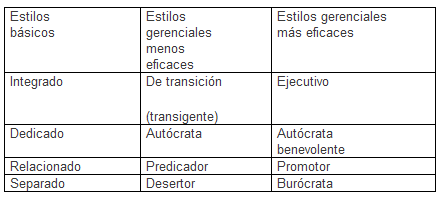
De allí las tres dimensiones (3-D) de estilos de comportamiento gerencial en el modelo de 3-D:
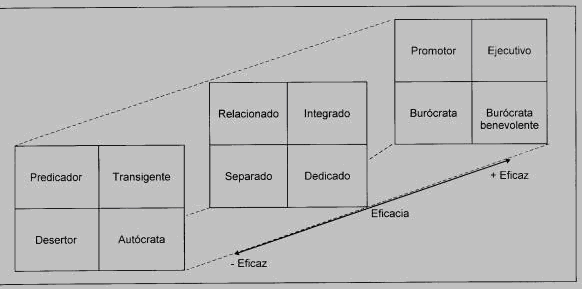
Para Reddin, no existe un estilo ideal. Cada situación requiere su propia estrategia. La eficacia no es una cualidad administrativa sino el resultado de aplicar la estrategia o el estilo gerencial más apropiado a la situación.
3. LAS HABILIDADES GERENCIALES BÁSICAS
La teoría 3-D pretende desarrollar tres habilidades gerenciales básicas:
- Sensibilidad situacional: es la habilidad para diagnosticar situaciones
- Flexibilidad de estilo: es la habilidad para adecuarse a las fuerzas en juego, una vez analizadas y diagnosticadas
- Destreza de gerencia situacional: es la habilidad de gestión situacional, o sea, la capacidad de modificar una situación que necesita ser modificada.
4. CONCEPTOS TEÓRICOS BÁSICOS
La teoría 3-D se basa en cinco conceptos teóricos básicos:
- El cambio organizacional es un proceso de reunir gerentes para intercambiar criterios sobre temas que deberían ser discutidos en un clima de confianza e interés, visualizando la conquista de la eficacia, Los ejecutivos son los que conocen o deben fijar la dirección para la organización;
- El programa 3-D no da una dirección: solo propone que se considere la eficacia como valor central, Se busca una respuesta «¿que hacer para hacer eficaz en esta situación? «;
- Los ejecutivos no aplican todo lo que saben. La solución está en dar a los ejecutivos la oportunidad de aplicar efectivamente lo que saben. La teoría 3-D pretende crear las condiciones para lograrlo;
- El cambio debe involucrar todas las unidades sociales. Una organización es integrada por individuos, equipos, etc. Todos deben participar en el proceso;
- La flexibilidad es condición necesaria del cambio, debe ser estimulada y deben crearse condiciones para establecerla, si se desea el cambio.
5. RELACIÓN ENTRE EFICIENCIA Y SITUACIÓN.
Las situaciones administrativas pueden ser visualizadas como campos de fuerzas ejercidas por el superior, subordinados, colaboradores, organización y tecnología.
Estos son los aspectos que un gerente debe reconocer, cambiar o ante los cuales debe reaccionar en determinada situación.
La eficacia es el grado en que el ejecutivo logra los resultados deseados de su función. Para alcanzarla es necesario poseer las tres habilidades gerenciales (diagnóstico, flexibilidad y gestión situacional).
El autor recomienda que cada ejecutivo analice y verifique lo que faltaría en la empresa si su función fuese suprimida simplemente. Esto identificaría su función específica para la empresa,
La eficacia es el resultado del producto, no del insumo. Un ejecutivo que identifique con precisión sus “áreas de eficacia» puede establecer y alcanzar objetivos claros. Puede medir su eficacia.
Reddin propone que el ejecutivo también haga lo mismo con relación a sus subordinados (tres o cuatro niveles), verificando sus áreas de eficacia y concentrándose en el control del producto (resultados) de cada posición subordinada en lugar de controlar las actividades.
EVALUACIÓN CRÍTICA DEL D.O.
El D.O. ha proporcionado a la TGA (Teoría General Administrativa) una literatura amplia y rica en enfoques variados.
Las principales críticas al D.O. son las siguientes:
1. ASPECTO MÁGICO DEL D.O.
Existen algunas características mágicas del D.O. creadas a partir de cuatro mitos:
- El mito de la disciplina del D.O.: se ha dado énfasis al D.O. como una disciplina basada en el método científico. Algunos autores consideran que el uso del entrenamiento de la sensibilidad y las relaciones entre cliente – consultor con áreas pertenecientes al D.O. En realidad son áreas de conocimientos que éste toma de otras disciplinas con campos de estudio muy bien delimitados;
- El mito de las variables no investigables: parece haber alguna resistencia a la investigación convencional dentro del D.O. Hay una contradicción entre la afirmación de que este se basa en el conocimiento científico y la resistencia encontrada en la utilización de métodos científicos en la investigación;
- El mito de la novedad: existe una noción de que el D.O. es un nuevo proceso o un conjunto de nuevas técnicas que facilitan el cambio. Sin embargo los métodos y procesos de D.O. son relativamente antiguos. El mito de la novedad agrega una calidad mágica al D.O. que, como técnica nueva, es más efectiva que las antiguas y facilita de sobre manera el proceso de cambio;
- El mito de la eficacia aumentada: los autores de D.O. argumentan que sus técnicas aumentan la capacidad de la organización de dirigir sus objetivos con eficacia. Sin embargo, los resultados son realmente discutibles. Relaciones más auténticas entre el personal no significan necesariamente un aumento de las utilidades de la organización.
2. IMPRECISIÓN EN EL CAMPO DEL DO.
El desarrollo de grupos-t de capacitación en el laboratorio y de otras formas para aumentar la interacción o terapia de grupo provoco el surgimiento del DO que se convirtió en código para asignar programas y actividades que provenían de varias tendencias, dentro de un nuevo enfoque de educación y capacitación. Esa impresión en el campo del DO dificulta su definición.
3. ÉNFASIS EN LA EDUCACIÓN EMOCIONAL.
El DO enfoca la capacitación de habilidades en la relación interpersonal, teniendo como base las ciencias de la conducta, el DO no se preocupa por las habilidades de dirección sino únicamente con las relaciones humanas.
4. APLICACIONES DISTORSIONADAS DEL DO.
Muchas organizaciones se aproximan al modelo monocratico sustentado en el derecho de la propiedad privada. Los dirigentes de las organizaciones poseen un poder y elevado estatus social y económico. En la medida en el que la legitimidad basada en el derecho de propiedad privada pierde sustancia, los dirigentes recurren a procedimientos para entender mejor o mejorar su estatus quo y promociones personales en muchos casos el DO se ha utilizado como un instrumento para asegurar tales objetivos y su utilización se deriva del efecto demostración, que busca mucho mas la legitimación externa y sus efectos sobre la imaginación publica de la organización, que la interna.